
Eixample Barcelona Guide: Things to Do, Eat & Where to Stay
Eixample Barcelona Guide: Things to Do, Eat & Where to Stay
Contents
- Find Your Hotel in Eixample
- What to see in Eixample Barcelona
- Main attractions in the Eixample
- Sagrada Familia
- Casa Milà-La Pedrera
- Casa Batlló
- Casa de les Punxes
- Neighborhoods of the Eixample
- 1. Dreta de l'Eixample
- 2. Antiga Esquerra
- 3. Sagrada Familia neighborhood
- 4. Fort Pienc
- 5. Sant Antoni
- 6. Nova Esquerra
- Not Sure Which Part of Eixample to Stay In?
- Where Locals Actually Eat & Drink in Eixample
- Start with the Street: Enric Granados
- Sunday Vermouth: The Ritual You Shouldn't Skip
- Casual Lunch: Skip the Tourist Menus
- Dinner Worth Planning For
- Coffee & Breakfast
- One Thing Not to Do
- Brief history of the Eixample
- Practical Information for First-Time Visitors to Eixample
- Getting Around: Metro is Your Best Friend
- How Walkable is Eixample?
- Is Eixample Safe?
- When to Visit
- What Will It Cost?
- Beating the Crowds
- Find Your Perfect Base in Eixample
*Last updated: July 2026
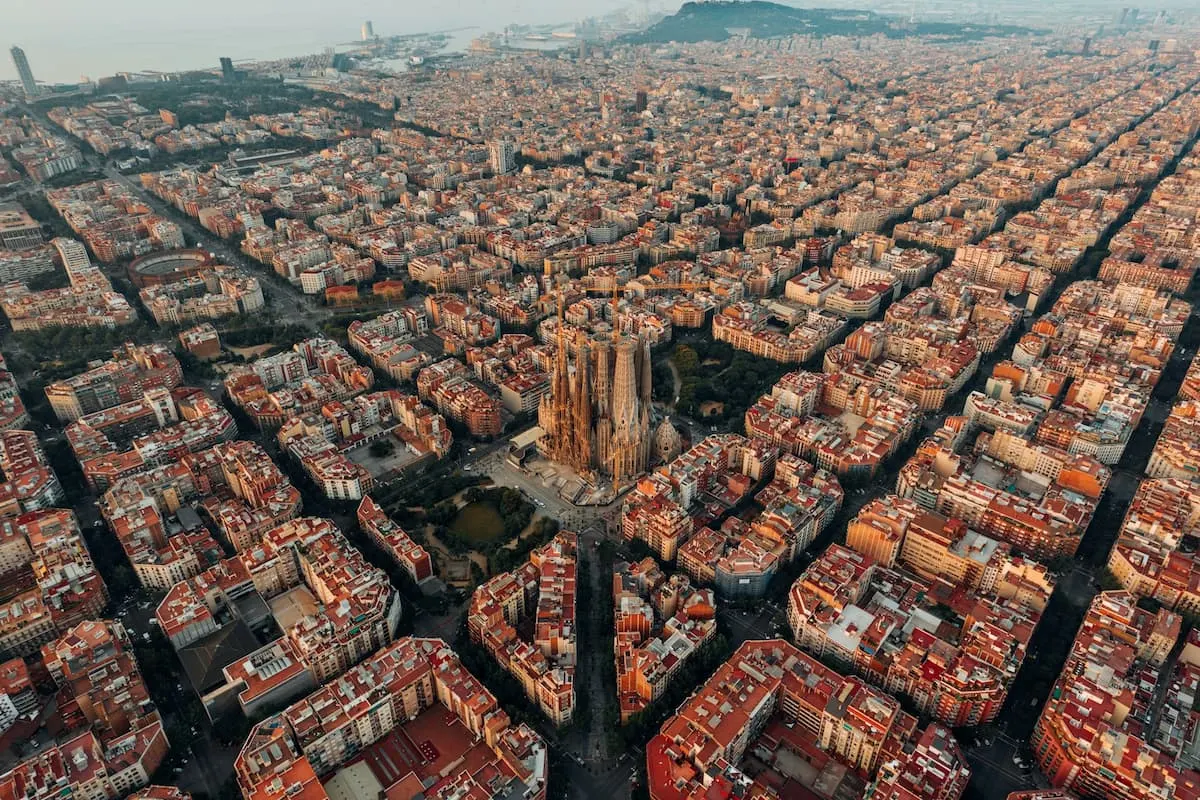
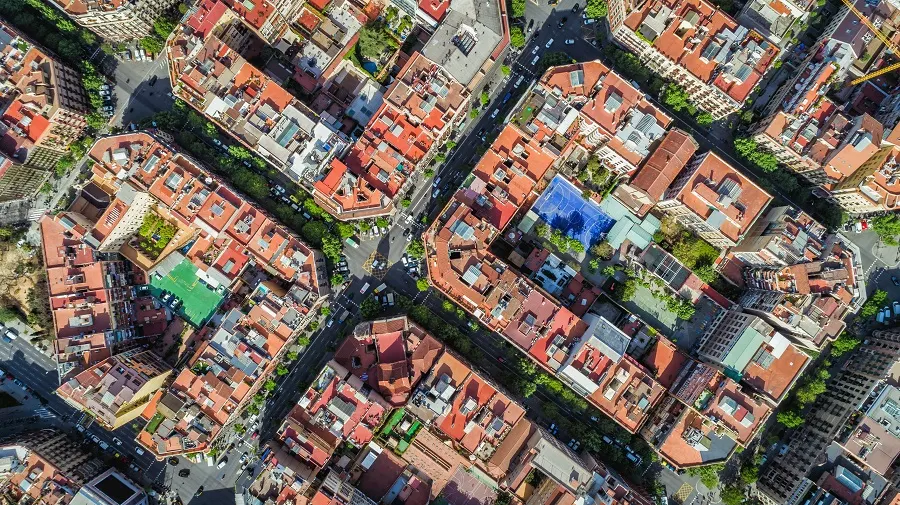
Eixample is the neighborhood that makes Barcelona look like Barcelona. This perfect grid of octagonal blocks wasn't an accident. It was designed in 1860 by engineer Ildefons Cerdà as a radical vision of a humane city, with wide streets, chamfered corners so carriages could turn, and green courtyards inside every block. (Most of them became parking lots instead, but that's another story).
Today, Eixample is where most visitors end up staying, and for good reason. It's central, walkable, well-connected by metro, and home to the highest concentration of Gaudí buildings anywhere in the world. Sagrada Família, Casa Batlló, La Pedrera and Casa de les Punxes are all here, within walking distance of each other. So are some of the best restaurants in the city.
But Eixample is also six different neighborhoods in one, each with its own personality, from the upscale boutiques of Dreta to the craft beer bars of Sant Antoni and the LGBTQ+ scene of the Gaixample. This guide covers all of it.
What to see in Eixample Barcelona
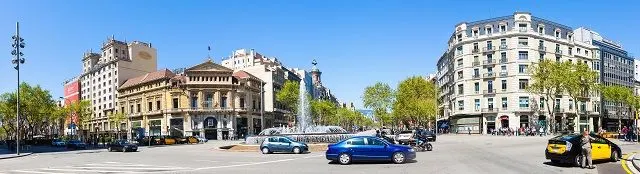
Eixample is where you go when you want to understand why Barcelona has the reputation it does. The Passeig de Gràcia alone contains more architectural landmarks than most cities manage in their entire centre. Pair that with the Sagrada Família neighbourhood to the northeast, and you have the highest concentration of significant buildings in Spain, maybe in Europe.
It's also one of the best areas to stay in Barcelona, central, walkable, and well-connected enough that you're never more than a metro stop from anywhere you need to be. And when you're done with the monuments, Eixample has some of the best shopping in Barcelona too, from the luxury flagships on Passeig de Gràcia to independent boutiques tucked into the side streets of Sant Antoni.
Here are the main landmarks you shouldn't miss.
Main attractions in the Eixample
Sagrada Familia
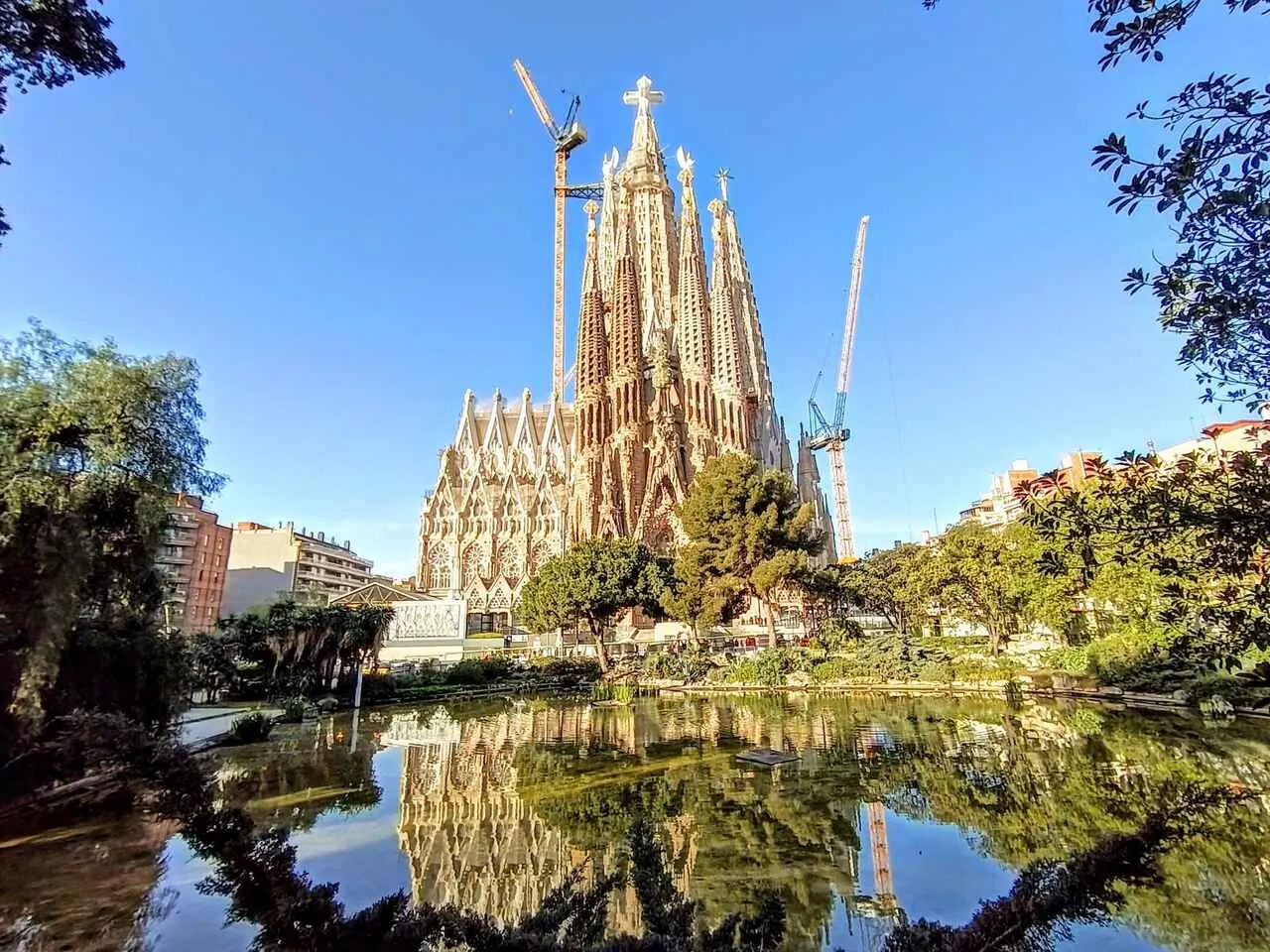
Started in 1882 and still technically under construction, the Sagrada Familia is unlike anything else on earth. Gaudí took over the project in 1883 and spent the next 43 years redesigning it into something the world had never seen, a basilica where every surface tells a story from scripture, every column mimics a forest canopy, and the light through the stained glass changes colour by the hour.
In February 2026, the central Tower of Jesus Christ reached its full height of 172.5 metres, making it officially the tallest church in the world. Book tickets weeks in advance as this is the most visited monument in Spain.
Get Fast Track Sagrada Familia Tickets
Casa Milà-La Pedrera
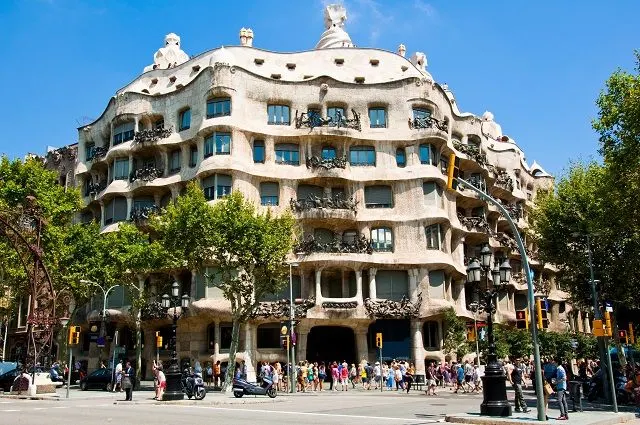
Built between 1906 and 1912, La Pedrera (the nickname means “the quarry”, locals weren't always enthusiastic) is Gaudí's last purely civil building before he dedicated himself entirely to the Sagrada Família. The rooftop is the headline: an otherworldly landscape of twisted chimneys that look like armoured knights, with views across the Eixample grid to the sea.
The interior is equally impressive: undulating ceilings, no straight walls, a building that feels alive. Evening tickets for the rooftop experience are worth considering as an alternative to the daytime visit.
Casa Milà Skip-the-Line Ticket – 25€
Casa Batlló
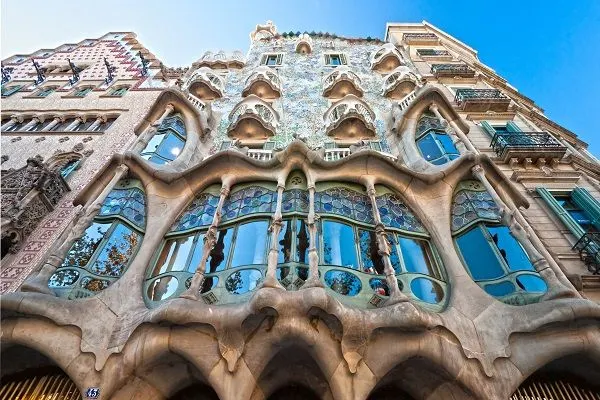
A few blocks down Passeig de Gràcia from La Pedrera, Casa Batlló is arguably Gaudí's most visually arresting building: all shimmering blue-green ceramic tiles on the facade, a roof shaped like a dragon's back, and balconies that look like carnival masks.
It sits on the so-called Block of Discord (Manzana de la Discordia), a stretch of Passeig de Gràcia where Gaudí, Domènech i Montaner and Puig i Cadafalch all competed for the same wealthy patrons. The immersive night experience here is one of the best ways to see it, theatrical, less crowded than daytime, and genuinely memorable.
Casa Batlló Skip-the,line, Premium Entrance
Casa de les Punxes
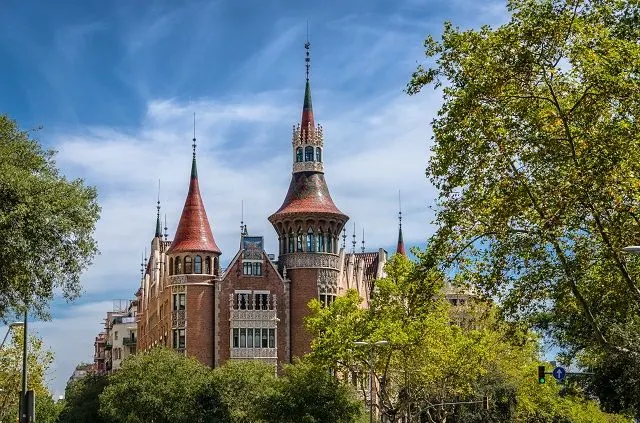
Designed by Josep Puig i Cadafalch and completed in 1905, Casa de les Punxes is the Gothic castle you don't expect to find in the middle of a 19th-century grid. Six pointed towers, brick facade, and a triangular footprint that takes up an entire Eixample corner at Avinguda Diagonal. It was declared a historic monument in 1975 and is one of the finest examples of Catalan Modernisme outside the Gaudí canon.
Worth knowing before you go: the building no longer operates as a tourist attraction. Since the pandemic it has been converted into a coworking space run by Cloudworks, with a café and rooftop terrace open to the public on the ground floor. You can visit the exterior (and it's absolutely worth doing) but a ticketed interior visit is not currently available. The exterior alone, particularly the towers and the ceramic facade detail, justifies the short detour from Passeig de Gràcia.
Neighborhoods of the Eixample
Eixample isn't one neighbourhood, it's six, each with a distinct personality, price point and atmosphere. Where you stay in Eixample changes how you experience Barcelona.
1. Dreta de l'Eixample
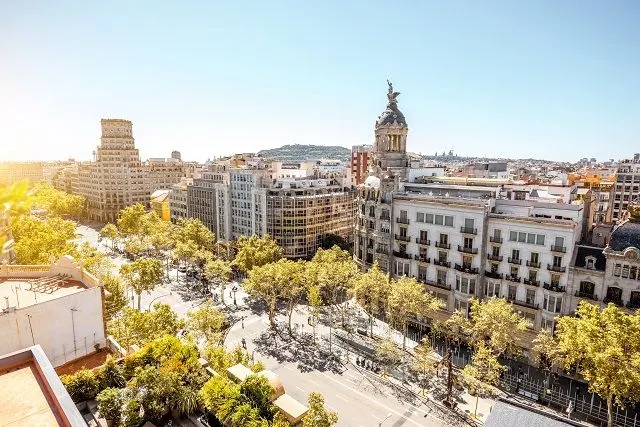
The Dreta (right side) is the prestigious heart of Eixample, Passeig de Gràcia runs through it, and Casa Batlló, La Pedrera and the Block of Discord are all here. This is where Barcelona's wealthy bourgeoisie built their showpiece homes in the early 20th century, and the architecture still reflects it. Best for first-timers who want to be at the centre of everything.
Several of our picks in the best boutique hotels in Barcelona are right here in Eixample, including properties on and just off Passeig de Gràcia.
2. Antiga Esquerra
Antiga Esquerra sits just west of Passeig de Gràcia and is more residential and local-feeling than Dreta: lower hotel prices, better neighbourhood bars, and the same metro access without the tourist premium.
On the other hand, streets like Aribau, Casanova and Muntaner and Plaça Universitat concentrate most of the bars and clubs. This area is also know as the Gaixample.
The Gaixample
Although not an official neighborhood, an area of this district (located between Gran Vía, Balmes and Aragó streets), has become a magnet for gay tourism in Barcelona, resulting in the rise of several Gay friendly Hotels and a very extense offer of gay clubs and bars.
Over the past two decades, the zone has seen the arrival of gay shops, restaurants and nightclubs. Even so, the zone remains a multicultural and yet traditional neighborhood.
The neighbourhood's best-known LGBTQ venue is Arena Club, the city's most established gay nightclub, which has anchored the scene here for over two decades.
3. Sagrada Familia neighborhood
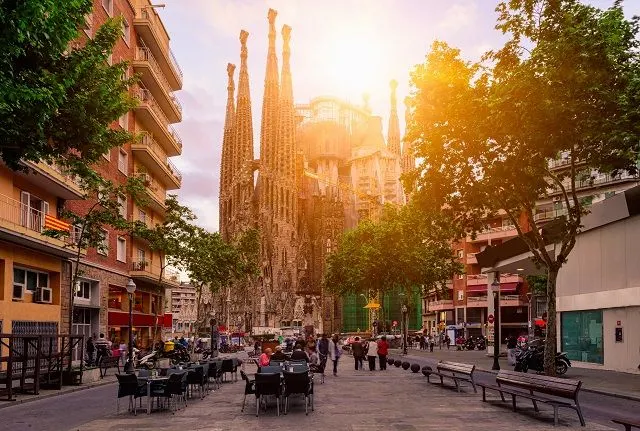
This neighbourhood has transformed in the past decade from an afterthought into one of the most interesting places to stay in Barcelona. Yes, you wake up with the Sagrada Família outside your window, but you also get the Sant Pau Art Nouveau site (a UNESCO World Heritage modernist complex that most tourists walk past), quieter streets, and genuinely local cafés along Avinguda Gaudí.
Don't miss taking a walk down the stunning Gaudí Avenue, a pedestrian only avenue that connects both monuments, with plenty of restaurants, bars and shops.
We help you find 5 cheap hotels near Sagrada Familia.
4. Fort Pienc
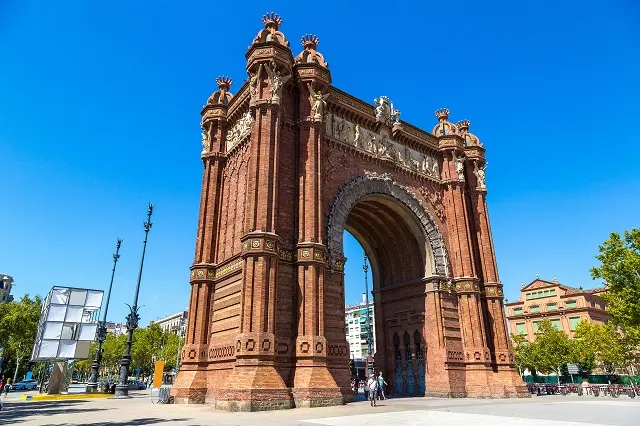
Fort Pienc is the most under-the-radar part of Eixample, with the Arc de Triomf and L'Auditori concert hall as its landmarks. Fewer tourists means slightly better prices and a more authentic neighbourhood feel, while still sitting within easy metro reach of everything.
The iconic Arc de Triomf is definitely the main attracion of the small but lovely Fort Pienc neighborhood, a great and cozy area to find top-notch hotels. Not too far, you'll find Estació del Nord, Barcelona's main coach station.
You shouldn't miss walking along the Passeig Sant Joan, the main avenue leading to Arc de Triomf. A perfect place to get early drinks and dinner in one of the many cozy bars and restaurants.
5. Sant Antoni
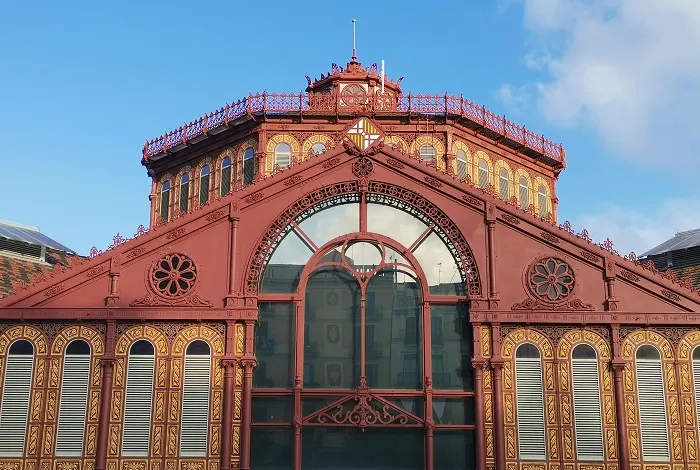
Sant Antoni is arguably the coolest neighbourhood in Barcelona right now. The remodelled Mercat de Sant Antoni reopened in 2015 and triggered a wave of independent restaurants, craft beer bars and independent shops that has never really stopped. Carrer del Parlament on a Sunday morning, with every terrace full of people drinking vermouth, is one of those Barcelona experiences that stays with you.
Its quiet streets make it perfect if you're visiting Barcelona with kids.
6. Nova Esquerra
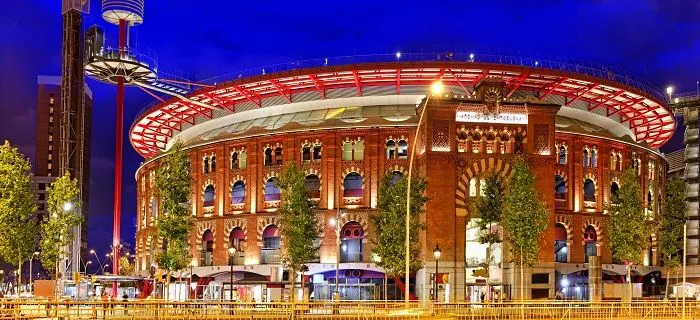
The Nova Esquerra neighborhood is located to the southwest of the Eixample district, limiting with Plaza España and Arenas shopping center.
It's a recommended place to stay in Barcelona if you're arriving by train or if you plan on doing sightseeing near Barcelona. Sants station, the largest train station in the city is located within this neighborhood.
Where Locals Actually Eat & Drink in Eixample
Eixample has more restaurants per square kilometre than almost anywhere in Europe. That's a blessing and a curse, because for every great local bar, there are three overpriced tourist traps a block away. Here's how to navigate it.
Start with the Street: Enric Granados
Before naming individual spots, you need to know about Carrer d'Enric Granados. This semi-pedestrianised street runs from Plaça Universitat up to Diagonal, just three blocks west of Passeig de Gràcia, and it's the best place in Eixample to simply sit outside and eat. Wide pavements, palm trees, minimal traffic, and terraces spilling out from almost every building. On a warm evening, walking down it at 9pm and picking whichever terrace looks good is a perfectly valid strategy, and a very local one.
For a longer weekend morning, Eixample has the highest concentration of brunch spots in the city. Our guide to the best brunch in Barcelona covers the top picks in the neighbourhood and beyond. The following are also worth checking out:
- DelaCrem (nº 15) is a reliable stop for some of the best artisan ice cream in the city
- Brunch & Cake (nº 19) draws long weekend queues for a reason
- For something more substantial, Bodega Granados serves creative tapas with a gorgeous terrace
- La Moderna (nº 110) is an old-school bodega doing bulk vermouth and honest bar food at very honest prices
Sunday Vermouth: The Ritual You Shouldn't Skip
Barcelonans take el vermut seriously. Sunday late morning (roughly 12:00 to 14:00), is when half the neighbourhood heads out for a glass of vermouth and some snacks before lunch. The Sant Antoni area is ground zero for this ritual. Carrer del Parlament and the streets around the renovated Sant Antoni Market are packed with vermut bars doing it properly: cold, slightly bitter, served with olives and maybe a gilda (anchovy, olive and guindilla pepper on a stick).
- Bar Calders on Carrer del Parlament is the classic reference point — always busy, always good. €
Casual Lunch: Skip the Tourist Menus
Avoid anything with a laminated photo menu near the Sagrada Família. Instead, look for places offering a menú del día — the set lunch deal (starter, main, dessert, drink, bread) that by law must be offered at a lower price than à la carte. Most working locals eat this way. Expect €12–16 for a proper three-course lunch.
- Cerveceria Catalana on Carrer Mallorca is a perennial favourite for tapas and is almost always packed — arrive before 13:30 or expect a wait.
- La Flauta on Carrer d'Aribau is known for its flautas (sandwiches in crusty baguette bread) and solid tapas at very fair prices. €€
Dinner Worth Planning For
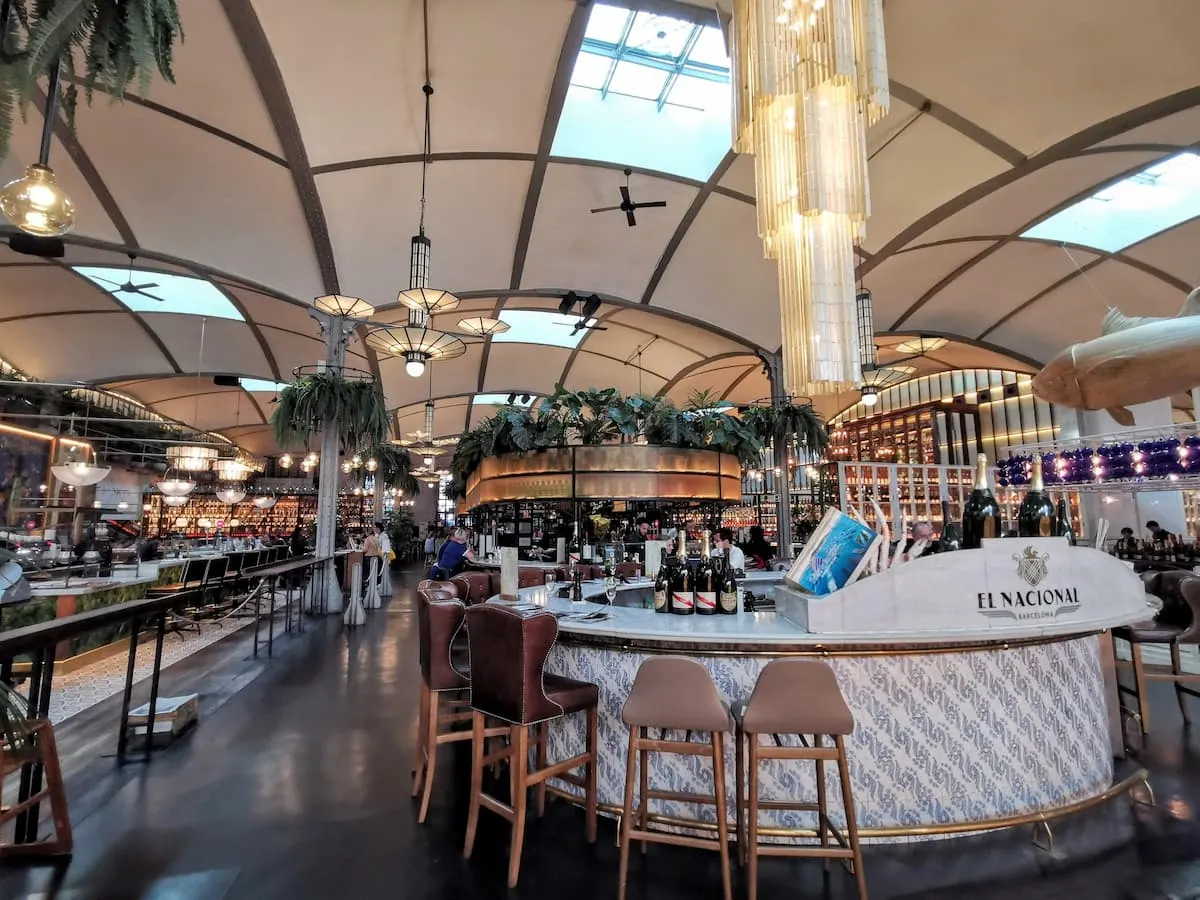
- El Nacional, an enormous 1930s-inspired space off Passeig de Gràcia, is the most atmospheric option in Eixample for a group dinner. It's four restaurants and four bars under one roof, each with a different vibe and menu, from grilled meats to oysters. It's not the cheapest, but the setting is genuinely spectacular. Book ahead. €€€
- For a more intimate splurge, Disfrutar on Carrer de Villarroel is run by three former head chefs of elBulli and holds two Michelin stars. Tasting menus start around €220. Not for every night, but if food is the point of your trip, this is one of the best restaurants in the world right now. Book weeks in advance. €€€€
Coffee & Breakfast
Eixample has quietly become one of the best neighbourhoods in Barcelona for specialty coffee.
Nomad (roasters based in Palo Alto, with a café on Carrer del Consell de Cent) is the local benchmark. For a more classic start to the day — pa amb tomàquet (bread rubbed with tomato and olive oil) and a cortado — any neighbourhood bar on a non-touristy block will do it better and cheaper than anywhere near La Rambla.
One Thing Not to Do
Don't eat on Passeig de Gràcia itself. The boulevard is beautiful for walking, but the restaurants on it are overwhelmingly priced for tourists, not quality. Walk one or two blocks in either direction and your meal will be better and half the price.
Brief history of the Eixample
Before the walls of the Old City quarter were demolished, small towns were scattered across the surrounding countryside.
But with the arrival of the Industrial Revolution, the population grew dramatically and the Barcelona center didn't have the best sanitary living conditions.
In 1855, the City Hall called out for a public competition in order to solve the city's need for growth. Ildefons Cerdà, a civil engineer, won the project for the Eixample (catalan word for expansion), a huge undertaking that would construct the new Barcelona.
Cerdà envisioned a city with a high regard for the people's need for leisure, health and social relationships. The main goal was making a better use of the space. Thus, he designed a grid-like pattern that would fill the area between the city walls and the surrounding towns.
Practical Information for First-Time Visitors to Eixample
Getting Around: Metro is Your Best Friend
Eixample is one of the best-served neighbourhoods in the entire Barcelona metro network. Five lines cross through it — L1, L2, L3, L4 and L5 — which means you're almost never more than a 5-minute walk from a station. The key hubs to know:
Passeig de Gràcia is the most central station and connects lines L2, L3 and L4 — it puts you in the heart of the neighbourhood, steps from Casa Batlló and La Pedrera. Sagrada Família is served by L2 and L5. Verdaguer (L4 and L5) is a quieter station in the middle of the neighbourhood, useful if you're staying near Casa de les Punxes. Diagonal (L3 and L5) covers the upper end of Eixample near Avinguda Diagonal.
A single metro ticket costs €2.90, but if you're staying more than a couple of days, the T-Casual card (10 trips for €13) is the smarter buy. It works on metro, bus and tram across the city.
How Walkable is Eixample?
Very, but don't underestimate the distances. Eixample is roughly 30 blocks long from end to end, which is about an hour's walk. From Plaça Catalunya to Sagrada Família on foot takes around 25–30 minutes at a comfortable pace. From Sagrada Família to Casa Batlló, about 20 minutes.
The good news is the grid layout means you never get lost. Every block is the same size, the streets are wide and well-lit, and walking between monuments is genuinely pleasant — especially in the morning before the heat sets in. In summer, try to do your walking sightseeing before 11am or after 6pm. Midday in July on the Eixample pavement is not a fun experience.
Is Eixample Safe?
Honestly, yes! It's one of the safer parts of Barcelona. Wide streets, good lighting, lots of foot traffic and regular police presence around the main attractions make it a comfortable neighbourhood to walk around day or night.
That said, pickpocketing is real in Barcelona, and Eixample is not immune, particularly around Sagrada Família where crowds are dense and tourist distraction is high. The usual rules apply: keep your bag in front of you, don't leave your phone on a restaurant table, and wear your backpack on your front on the metro. Eixample itself reports significantly lower theft rates than the Gothic Quarter or La Rambla, but complacency is your biggest enemy. The thieves here are professionals and they don't look like thieves.
When to Visit
Spring (April–June) and Autumn (September–October) are the sweet spots. Temperatures are comfortable (18–24°C), the light on the Modernisme buildings in the late afternoon is extraordinary, and the city is full but not overwhelmed.
July and August are peak tourist season: Sagrada Família sells out weeks in advance, queues everywhere are longer, and the heat (regularly above 30°C) makes walking between attractions genuinely exhausting. If you're visiting in summer, book all tickets before you leave home, full stop.
Winter (November–February) is underrated. Eixample in winter is quieter, cooler and cheaper. You'll walk into monuments that in summer have 90-minute queues. The downside is shorter daylight hours and the odd rainy week, but Barcelona winters are mild by northern European standards.
What Will It Cost?
Eixample isn't cheap, but it doesn't have to be expensive either. A rough daily budget guide:
A coffee and pastry breakfast at a local bar: €3–5. The same thing at a terrace café on Passeig de Gràcia: €8–12. A menú del día (3-course lunch with wine): €13–18. A dinner at a mid-range restaurant: €25–40 per person. Monument entry fees: Sagrada Família from €26, Casa Batlló from €35, La Pedrera from €29. If you're planning to visit three or more attractions, a Barcelona Pass or Go City card is worth calculating against individual ticket prices.
The biggest budget trap in Eixample is eating on or immediately adjacent to Passeig de Gràcia. Walk two blocks in either direction and prices drop noticeably.
Beating the Crowds
One genuine local tip: book Sagrada Família for first thing in the morning, ideally 9am opening. The light through the stained glass on the Nativity façade side is at its best in the morning, the crowds are thinner, and you'll be done before the tour groups arrive in force around 11am. Afternoons at Sagrada Família in high season are genuinely unpleasant.
For Casa Batlló and La Pedrera, the evening tickets (where both buildings do immersive night experiences) are worth considering as an alternative. Less crowded, more atmospheric, and a very different experience from the daytime visit.