
Barcelona Olympic Park
Barcelona Olympic Park
Contents
- Ride the Montjuic Cable Car
- The event that reshaped Barcelona
- What to see at Barcelona Olympic Park
- Barcelona Olympic Stadium (Estadi Olímpic Lluís Companys)
- The Olympic and Sports Museum (Museu Olímpic i de l'Esport)
- Palau Sant Jordi
- Calatrava's Telecommunications Tower
- Poble Espanyol — nearby, not part of the Olympic Ring
- Poble Espanyol Entry Ticket
- What the Olympic Park is like today
- How to get there
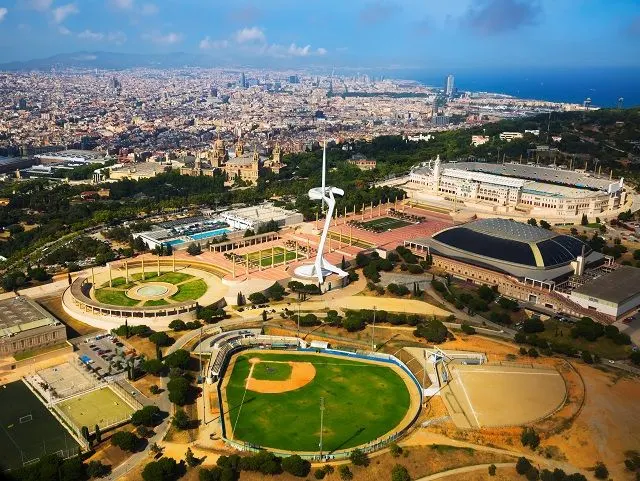
The Barcelona Olympic Park — known locally as the Anella Olímpica (Olympic Ring) — is the cluster of venues built for the 1992 Summer Olympics on the slopes of Montjuïc mountain. The main draws are the Olympic Stadium, the Palau Sant Jordi sports arena, and Santiago Calatrava's striking Telecommunications Tower. Most of it is free to visit and open year-round. It's one of the few places in Barcelona where you can genuinely feel the scale of how the city reinvented itself.
It's part of the wider Montjuïc area, which is well worth a full half-day. If you're planning what to do while you're here, check our guide to the best things to do in Barcelona.
The event that reshaped Barcelona
Before 1992, Barcelona was a proud but overlooked city. The Olympic Games changed that permanently. The city used the event as a lever to tear down old industrial barriers, open the waterfront, and build infrastructure it had wanted for decades. The result was one of the most successful urban transformations of the 20th century — and the Olympic Park on Montjuïc was at the centre of it.
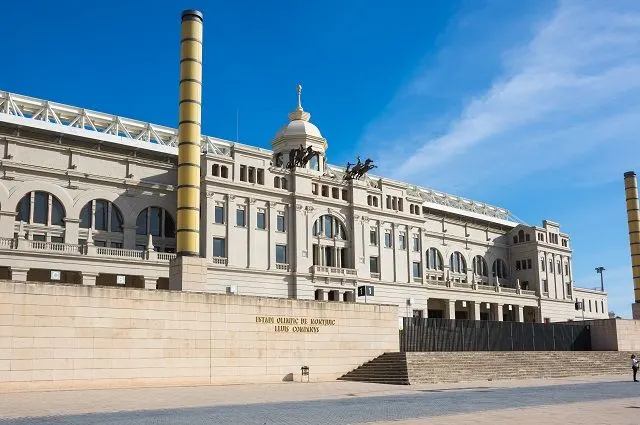
The Olympic Stadium itself dates back to 1929, built for the International Exposition that never used it. It sat largely dormant for 60 years until a major rebuild in 1989 made it fit for purpose. The fact that the shell of a 1929 building hosted a 1992 Olympics is a very Barcelona thing — practical, historically layered, and slightly improvised.
The surrounding facilities — the Palau Sant Jordi, the Telecommunications Tower, the INEFC sports university, and the Picornell pools — were all built or rebuilt for the Games. Together they form the Anella Olímpica, a compact precinct you can walk end-to-end in about 20 minutes.
Today the area is genuinely used by locals — for running, cycling, outdoor exercise, and events. On a weekend morning, you'll share the esplanade with Barcelona residents on their Saturday run. That's a good sign: places locals actually use tend to be worth visiting.
What to see at Barcelona Olympic Park
The best way to take in the whole area — including the park, viewpoints, and the Olympic Ring — is by bicycle. This Montjuïc Bike Tour covers the key sites with a guide who actually explains what you're looking at. It's suitable for most fitness levels and good with kids.
Barcelona Olympic Stadium (Estadi Olímpic Lluís Companys)
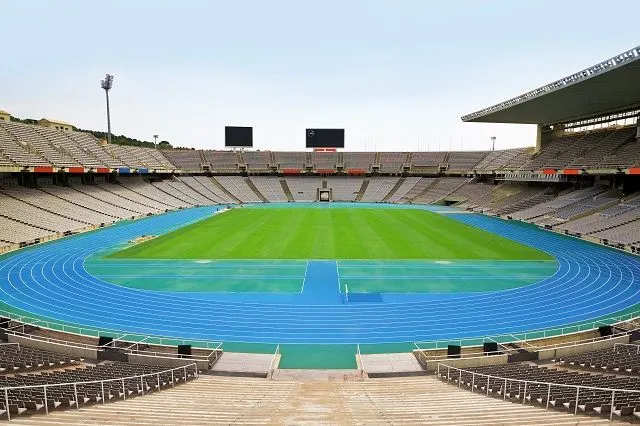
The stadium's full name is the Estadi Olímpic Lluís Companys — named after the Catalan president executed by Franco in 1940. It holds around 55,000 people and is used today for athletics events, occasional football matches, and large-scale concerts. The Olympic flame cauldron, the one lit by archer Antonio Rebollo in the opening ceremony, is still inside.
You can walk in for free and look around the interior — the main arena, the cauldron, and the small gift shop. There's also the Olympic Sports Café if you want a break. It's not a museum experience, but standing on the running track where Carl Lewis competed is its own thing. (Hours and free-entry policy: verify before visiting as they may change for event days.)
Concerts at the Olympic Stadium
The stadium has a long history as one of Europe's biggest outdoor concert venues. Acts that have performed here include The Rolling Stones, Bruce Springsteen, David Bowie, U2, Madonna, Michael Jackson, Tina Turner, and Coldplay, among others. Check current listings before your visit — major tours still use it regularly.
Opening hours
- Summer (April 1 to October 31): 6:00 – 22:00
- Winter (November 1 to March 31): 6:00 – 20:00
- Closed on event days — check ahead if you're planning a specific visit
The Olympic and Sports Museum (Museu Olímpic i de l'Esport)
Right next to the stadium, this museum covers both the 1992 Games and the broader history of Olympic sport. It's hands-on and well laid out — you can test your reaction speed, measure your jump, or sit in a real racing car simulator. There's enough here for a good 90 minutes, and it's a solid option if you're visiting with children or anyone who's into sports history.
The museum also has a section on Joan Antoni Samaranch, the Barcelona-born IOC president who was instrumental in bringing the Games to the city. Worth a few minutes even if you're not a sports history enthusiast — the political backstory is interesting. Book your tickets here — prices and hours, verify before visiting.
Palau Sant Jordi
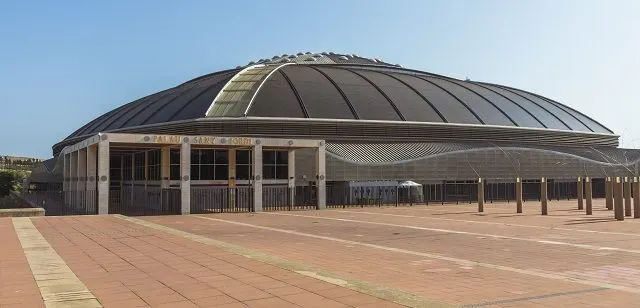
Designed by Japanese architect Arata Isozaki, the Palau Sant Jordi is one of the most architecturally significant buildings in Barcelona. Its domed roof — built using an innovative “lifting” construction technique where the structure was assembled on the ground and raised hydraulically — was engineering news in 1990. It hosted gymnastics, handball, and volleyball in 1992.
Today it's a major indoor venue for concerts and sports events. Capacity is around 17,000. If a big act is coming to Barcelona, there's a good chance they're playing Sant Jordi. The exterior is worth seeing up close; the interior is only accessible during events.
Calatrava's Telecommunications Tower
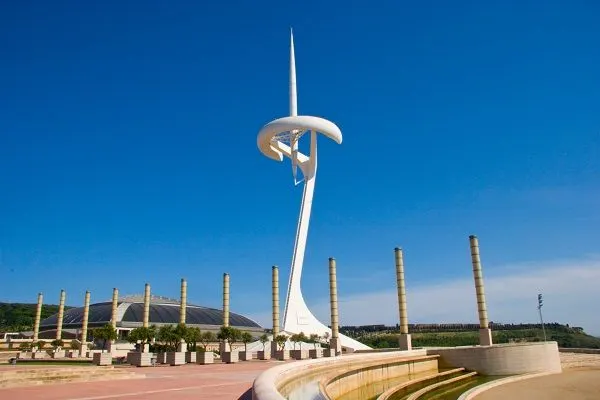
The Torre de Telecomunicacions de Montjuïc, designed by Santiago Calatrava, was built to transmit the Olympic broadcast signal to the world. It's 136 metres tall, angled to point toward the North Star, and deliberately designed to look like a human figure holding a torch. You'll either find it beautiful or excessive — both reactions are reasonable.
It's not open to the public, but it's visible from almost everywhere in the park and makes a good landmark. The esplanade around it is one of the better spots on Montjuïc to stop and look out over the city.
Poble Espanyol — nearby, not part of the Olympic Ring
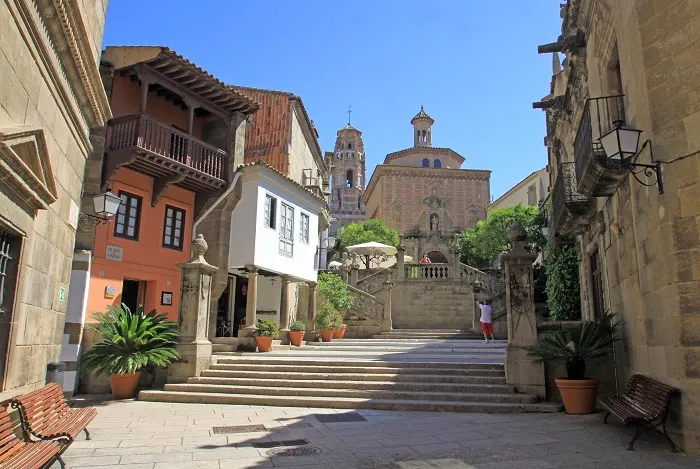
Poble Espanyol is not part of the Anella Olímpica, but it's a 5-minute walk away and worth flagging. It's an open-air museum built for the 1929 International Exposition — a reproduction of streets and buildings from across Spain, all in one walled compound. It also hosts craft shops, restaurants, and a popular nightclub (Discothèque).
It's more interesting than it sounds. The architecture is genuinely varied and the space is pleasant to walk through. Good for an hour, especially if you're already up on Montjuïc.
What the Olympic Park is like today
The Anella Olímpica isn't a theme park and it doesn't try to be. The esplanades are wide, the views over the city are genuinely good, and on most days it's quiet enough to appreciate the scale of the place without crowds. Weekday mornings are ideal — you'll have most of it to yourself.
It's a popular circuit for runners and cyclists — the flat, traffic-free paths around the Ring make a good loop. If you're staying in the city for a week or more, it's worth a morning run up here just for the perspective.
How long to spend: The Olympic Park itself is 1–2 hours. Add the museum (90 min), Poble Espanyol (1 hour), and the cable car or funicular ride, and you have a solid half-day on Montjuïc.
How to get there
Metro: Lines 2 and 3 to Paral·lel station, then take the Montjuïc Funicular (integrated into the metro fare).
Bus: Lines 55 and 150 stop near the park.
On foot: A steep 30-minute walk from Plaça Espanya — fine on the way down, hard work uphill in summer.
Cable car: The Montjuïc Cable Car is a good option if you want views on the way up — see our Montjuïc guide for details.